GUEST COLUMN.

COMMUNITY CYBERSECURITY REQUIRES A DIFFERENT MODEL
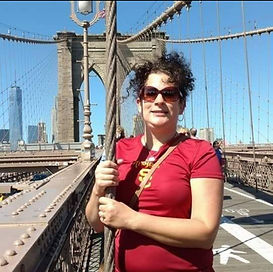
By Alyssa C. Rosenzweig former Deputy Director of the Overwatch Foundation

Contrary to popular belief, cybersecurity isn’t just about sophisticated technology and whiz-bang smart operators. It’s really about communities and organizations banding together to prioritize core cyber hygiene principles.
These protections don’t have to be expensive to make a major difference. Some of the best protections come in at less than $1,000 per year. Training, awareness of threats, and the commitment to see projects through can be among the most valuable investments a community makes.
The technology that we’re rapidly developing are advances we want to hand to the next generation. And that can only happen because ordinary people choose to defend their sanctity. This is a mindset before it is a mission: the willingness to look at the systems we all depend on and decide they are worth protecting. That choice is open to everyone, and the more of us who make it, the stronger our defenses become.
That is precisely why The Overwatch Foundation was founded. It’s a 501(c)(3) nonprofit built to safeguard the foundational institutions and infrastructure our communities, our state and our nation depend on by finding what’s exposed, mitigating it, and training the people who keep it defended.
We do this as part of a broad team, hand in hand with state and federal agencies, the people who fund this work, and the dedicated local IT teams and vendors a community already trusts. It’s both the public and private sector pulling in the same direction.
Two and a half years into assessing New Hampshire’s municipal organizations, we have seen unique challenges—not unique to New Hampshire, but a reflection of the risk profile our nation presents.
New Hampshire communities face the same workforce, budget, and technology maintenance constraints as the rest of our nation. Seventy-four percent of municipalities lack basic identity and access management. Sixty-five percent have never conducted cybersecurity training. Thirty-nine percent of those assessed have inadequate firewall protection.
These numbers didn’t surprise us. What should worry our country is how few places have ever measured them at all.
Technical fluency varies across our workforce, but many of the most effective defenses are well within reach. Modestly priced tools such as adopting a second factor for your password or using a password manager can significantly reduce common risks.
However, the harder barrier to overcome is trust.
We consistently see people’s eyes glaze at the mention of the word “cyber.” There is fear of the unknown and technology hesitation. Communities have also been sold solutions they don’t need or aren’t maximizing the value of the investments they have made.
This is where the nonprofit model matters.
As a nonprofit, we are not focused on a financial return. Our only vested interests are in making our communities and infrastructure safer. We break down misconceptions, walk communities through technical change, remove the need for deep technical insight to make the right decisions, and show up at their literal front door to train, discuss priorities, identify holes, and help justify the work ahead.
That unbiased perspective matters because most communities believe their environment works a certain way, that it’s sound, that it’s resilient, that someone has it covered.
We offer something no vendor selling a product can: an unbiased evaluation of whether that was actually true. Time and again, the environment people described and the environment we found were two different places. That gap—the quiet confidence that everything is fine—is itself the risk.
A nonprofit can help bridge that gap. It can help broker productive relationships between community leaders and their technology providers, as well as between teams of third-party technology providers. We help unite businesses that might otherwise be competitors around a standard of technical excellence that helps all communities and our nation.
Our results in New Hampshire thus far speak for themselves: 10,000 municipal email accounts migrated to trusted .gov domains. Water systems serving 10% of the state’s population upgraded. More than 76,000 students covered by managed endpoint defense. Nearly half of all municipalities engaged. Every county reached.
Most communities already know what to fix. But the budget never clears, the priority never rises, and the risk endures. This is the only thing we do, so we move faster and see it through when no one else has the room.
That is why we believe the nonprofit model is so important to community cybersecurity. When the objective is not to sell the next product or win the next contract, the objective becomes simple: make the community safer and leave it better equipped to protect itself.
When we all set aside profit and prestige, our nation is safer.
The threat is real. But so is the solution and the people ready to stand behind it. Together, this is ours to defend. We look forward to the work that lies ahead and to setting an example for other states to consider.
The contents of this Guest Column are those of the author, and not necessarily Barrett and Greene, Inc
#CommunityCybersecurityModel #NonprofitCybersecurityModel #CommunityCybersecurityProtection #StateandLocalCybersecurityManagement #StateandLocalCybersecurityPerformance #NonprofitCybersecurityManagement #StateandLocalCybersecurityAndNonprofitPartners #OverwatchFoundation #NewHampshireCybersecurityManagement #NewHampshireCybersecurityResults #StateCybersecurityManagement #CityCybersecurityManagement #CountyCybersecurityManagement #CityGovernmentTechnologyManagement #CountyGovernmenTechnologyManagement #RegionalCybersecurityManagement #StateCybersecurityProtection #NonprofitStateCybersecurityProtection #CityCybersecurityProtection #CountyCybersecurityProtection #StateandLocalCybersecurityCollaboration #StateandLocalCybersecurityProtections #StateandLocalCybersecurityCollaboration #AlyssaRosensweigGuestColumn #BandGGuestColumn #BarrettandGreeneInc