GUEST COLUMN.

INVESTING IN COMMUNITY
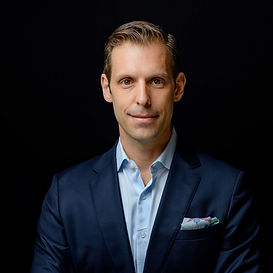
By Kent Mitchell, public policy strategist and recently Vice President of Strategy and Innovation for Lutheran Services in America’s network of 300 independent health and human services agencies

This year, the Head Start community will celebrate 60 years of delivering high-quality early care, education, and family support services to over 40 million children. Back in 1965, there was no guarantee that this anniversary would ever take place, particularly in light of the racial animus that led to Head Start’s creation in the first place.
So, what enables the Head Start community and other approaches to help society thrive, and not dissipate with the passage of time? And what can leaders in state and local governments learn from this as they tackle a growing range of public concerns?
As a former director of state affairs for the National Head Start Association, I regularly facilitated the engagement of a group of 250 Head Start leaders from all 50 states and territories, both in and outside of government. Whether they were working in Alabama or Alaska, they shared the same values, especially a commitment to equity. They had trusting conversations about policy and practice, openly sharing successes, setbacks and innovations. They consistently showed up in large numbers for webinars and conferences, responded to surveys and advocated on Capitol Hill with hundreds of others. They cared for each other, just like they cared for the children and families of Head Start.
With state and local governments taking on expanded roles in areas such as housing security, mental health, and workforce reskilling, the Head Start community’s example is a reminder that investing in a sense of community among leaders in public agencies, community-based organizations and people with lived expertise, is essential to advance progress on complex collective problems.
Fortunately, unlike when Head Start began decades ago, there are tools to measure and calibrate a sense of community. One of the most well-known, validated, free and easy-to-use tools is the Sense of Community Index (SCI). Developed by Community Science and now in its second iteration, the 24-question index (SCI-II) offers survey measures for any public sector leader seeking to better understand participants' views on the strength of a policy or practice community.
The SCI-II focuses on four key dimensions with broad relevance.
1) It helps understand whether a community is meeting the needs of participants. For example, when participants “have a problem,” do they feel like they “can talk about it with members of this community"?
2) It delves into participants' perceptions of their membership. For example, the tool asks whether participants can “trust people in this community” and whether people feel like other members “know me.” One of our most basic human needs is to be recognized and feel psychologically safe in a community.
3) It determines the extent members feel like the group has influence. We join communities in part to unite with others and create change in the world. To that end, the Index asks about perceptions of leadership in the group (are there “good leaders” in the community) and whether they think this community has the power to “influence other communities.”
4) Critically, it measures emotional connection. For example, do participants “care about each other”? And are participants “hopeful about the future of this community”? Few communities last without addressing both head and heart connection.
The power of the SCI-II lies in its validated questions backed by rigorous studies and analysis. Yet, state and local leaders need not be limited to its specific queries. There are numerous examples of state and local-led initiatives that use some of these measures–and others–to understand a sense of community.
With respect to building a sense of community among state employees, for example, the Vermont Department of Health (VDH) has invested in significant efforts to annually measure and improve employee engagement and sense of community. The most recent VDH survey of staff focused on seven main components: Alignment, Communication, Satisfaction, Peers, Supervisor, Growth, Balance. The survey found among the highest level of agreement on items assessing Peers (positive relationships in the workplace, including “care,” “respect,” peer commitment to “good work” and working “well together”) at 80.9%–a strong sense of community area. A key area for improvement related to a sense of community focus on influence was Communication (valuing employee voices, ideas, opinions) which had the lowest levels of agreement at 65.5%.
State and local engagement with people who have firsthand experience of specific issues takes many forms, from Georgia’s Parent Advisory Council, which advises the state on prevention-related work in child welfare, to San Mateo County’s (CA) Lived Experience Academy, which empowers people with mental health and substance use experience to draw on their stories to influence systems. When it comes to measuring the sense of community in these initiatives, The Center for Health Care Strategies recommends questions aligned to the SCI-II, such as asking lived experts whether they feel like “their voice is being heard” and “respected.”
Given the diversity of emerging methods and strategies for engagement of people with lived expertise, relevant sense of community measures also include asking how well prepared participants feel to contribute, their perceptions of the accessibility of engagement opportunities and the extent to which they felt like they benefited directly from such engagement and would recommend the experience to other friends and family.
We all want the widening array of complex state and local initiatives in housing, health, workforce and other areas to succeed. No matter the cause, taking conscious steps to build, measure, and reinvest in a sense of community among participating leaders and agencies is worth it. More connected communities of practice and policy achieve greater social impact, strengthen equity and build the kinds of community collaborations, partnerships and trust that can be repurposed for the challenges of tomorrow.
The contents of this Guest Column are those of the author, and not necessarily Barrett and Greene, Inc.
#MeasuringSenseOfCommunity #SenseOfCommunityIndex #SCII #InvestingInCommunityStrength #HeadStartCommunity #NationalHeadStartAssociation #StateandLocalCommunityEngagement #CityCommunityEngagement #StateandLocalEarlyEducation #LivedExperience #PreventionWorkChildWelfare #CommunityEngagement #InvestingInCommunity #CommunityInvestment #StateandLocalGovernmentAndPrevention #SanMateoLivedExperienceAcademy #GeorgiaParentAdvisoryCouncil #CenterForHealthCareStrategies #CityGovernmentAndCommunityStrength #EngagingPeopleWithLivedExperience #MeasuresOfCommunityStrength #CommunityAmongStateEmpoyees #MeasuringEmployeeEngagement #StateandLocalHumanResources #BuildingStateEmployeeCommunity #CommunityManagementandPerformance #CityGovernmentManagementandPerformance #KentMitchell #StateGovernmentManagementAndPerformance #BarrettandGreene #StateandLocalGovernmentManagement #CityGovernmentManagement #BandGGuestColumn