GUEST COLUMN.

REWRITING THE PLAYBOOK ON PUBLIC WORKS RECRUITMENT
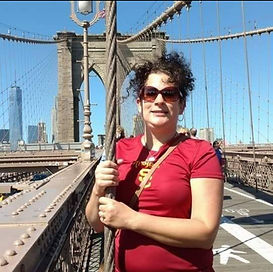
By Caitlin Lewis, Executive Director, Work for America

Local governments across the country are struggling to fill the Public Works jobs that keep communities running. Cities need mechanics to maintain fleets, operators to plow roads and repair infrastructure, and technicians to keep essential systems running. When these services decline, residents notice. But competition for skilled workers has intensified, hiring pipelines have narrowed, and many longtime employees are nearing retirement.
Baltimore, Maryland and Columbus, Ohio have shown us that this shortage doesn't have to be the new normal. Baltimore's Department of General Services cut key vacancies roughly in half by redesigning its hiring process, and Columbus closed its shortage of Commercial-Drivers-License (CDL) certified equipment operators through a partnership with the Ohio Reformatory for Women. These two different approaches to the same challenge prove that solving the skilled trades talent shortage means modernizing how cities hire and rethinking where they look for workers.
Both stories are worth understanding in detail, because the lessons from both can be applied in other places.
Simple fixes in Baltimore
In Baltimore, the Department of General Services faced mounting vacancies in skilled trades positions. Like many local governments, the agency was losing workers to private employers who could move faster and pay more. Posting a job and waiting for applicants was no longer enough, and large-scale policy change would take too long to meet the current challenge, so Baltimore rolled up its sleeves and redesigned systems it could control.
The city implemented a series of simple fixes that, when taken together, made all the difference. It set up recurring weekly interview slots, which cut down on scheduling delays because hiring managers had the time automatically blocked on their calendars. The department also redesigned hiring events so that candidates could apply, interview, and sometimes receive a conditional offer in a single day. It invested in candidate engagement, with HR staff staying in regular touch through phone calls, texts, and emails, often shifting outreach to evenings when candidates were more likely to respond. In a labor market where skilled workers have options, those small changes made a big impact.
The city also tracked hiring timelines closely and made certain that when delays occurred there would be accountability. The results were measurable. Vacancies in key divisions were cut roughly in half, and hiring timelines shortened dramatically.
Baltimore's experience is a useful reminder that improving recruitment doesn't always require new programs or policy changes. Sometimes it comes down to operational discipline, responsiveness, and a willingness to rethink outdated processes.
Finding the talent in Columbus
Columbus faced the same recruitment challenge but approached it from a different angle. The City's Department of Public Service was struggling to recruit CDL-certified equipment operators to maintain more than 5,000 miles of roadway. Competition for licensed drivers was fierce, and staffing shortages were affecting daily operations.
Columbus realized that the talent it needed already existed. But city leaders decided to look in a place most cities never think to look. The city built a partnership with the Ohio Reformatory for Women, a women’s prison, where participants could complete a rigorous six-month program covering construction and horticulture training, industry-recognized certifications, and workplace preparation. With a small amount of additional support, these women were ready to work when their sentences ended. Columbus aligned its hiring timelines with release dates, so that participants exit with a job offer already in hand, and the City fills critical roles with skilled, motivated employees.
The results speak for themselves. Since 2021, Columbus has hired 17 women through the partnership, and 14 of them have already been promoted. Participants have moved into CDL-certified operator roles and other career pathways within city government.
Columbus understood that cities cannot solve workforce shortages if they recruit from limited talent pools over and over again - and it did something about it.
Taken together, these two case studies highlight several broader lessons for local governments:
● Speed matters. Skilled workers have options, and governments that take months to hire will continue losing candidates.
● Recruitment must become proactive. The most successful agencies are not waiting passively for applicants; they are building pipelines, maintaining ongoing outreach, and treating candidate communication as part of the job.
● Workforce challenges require broader thinking about talent. Cities that expand access to public service careers, whether through apprenticeships, reentry partnerships, or other nontraditional pathways, are more likely to build resilient workforces over time.
● None of this works without leadership willing to think outside the box. In both Baltimore and Columbus, leaders treated hiring as mission-critical to delivering the services residents rely on every day.
Public works departments deliver some of the most visible services in local government, and the workforce behind them is under real strain. Baltimore and Columbus show that real progress is possible when governments modernize how they recruit, rethink where they find talent, and build clearer pathways into public service.
Note: This guest column draws on two recent Work for America case studies examining innovative public works recruitment strategies in Baltimore, Maryland and Columbus, Ohio.
The contents of this Guest Column are those of the author, and not necessarily Barrett and Greene, Inc
#StateandLocalGovernmentHumanResources #StateandLocalGovernmentHR #StateandLocalManagement #StateandLocalPerformance #CityGovernmentHumanResources #CityGovernmentHR #CityGovernmentManagement #CityGovernmentPerformance #CityGovernmentPerformanceManagement #StateandLocalInnovation #CityInnovation #CityHiring #CityRecruitment #StateandLocalHiring #StateandLocalRecruitment #ColumbusHiringInnovation #ColumbusRecruitmentInnovation #ColumbusPublicWorksRecruitment #ColumbusReformatoryForWomenAndCityRecruitment #MarylandHiringInnovation #MarylandRecruitmentInnovation #MarylandPublicWorksRecruitment #CityHiringAndCandidateCommunication #CityHiringAndPublicWorks #StateandLocalGovernmentWorkforceShortage #PublicWorksRecruitment #CityPublicWorksEmployeeShortage #CityPublicWorksHR #CityPublicWorksRecruitmentInnovation #StateandLocalTimeToHire #WorkForAmerica #StateandLocalHRLeadership #BandGGuestColumn #CaitlinLewis #BarrettAndGreeneInc