GUEST COLUMN.

CIVIC ENGAGEMENT IN HIGHER EDUCATION
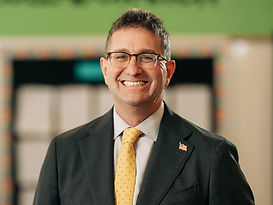
By Jerry L. Parker, Policy, Research, and Strategic Initiatives Fellow, Louisiana Center for Research and Education on Languages and Literacies/ Faculty, Southeastern Louisiana University

For centuries higher education has served as the pinnacle of knowledge creation, sharing, and innovation around the globe. Yet, while there is no international curriculum dictating what body of knowledge should be taught, every country has a distinct form of higher education that seeks to create an educated citizenry beyond what has been deemed basic knowledge and skills.
The United States of America is world renowned as a leader in the higher education space because of its unique models for research, student housing, athletics, community partnerships, and institutional advancement.
However, as American higher education seeks to find its place in the 21st century job market, one growing area of importance for graduates is the ability to engage in their workplace and local community.
As various knowledge sharing avenues such as social media, YouTube, and podcasting start to reach broader audiences, it is becoming paramount that colleges and universities embed civic engagement into the undergraduate experience to develop future leaders and changemakers.
What is civic engagement?
As argued by Joseph Kahne and Ellen Middaugh in 2004, [RG1] “civic education explicitly teaches the knowledge, skills and values believed necessary for democratic citizenship.” This conventionally has been offered via civics and government courses in high schools. In higher education, civic education takes the form of civic engagement and a focus on students’ personal and social responsibility to advance our democratic society.
Further, in a 2022 report, the American Association of Colleges and Universities described civic engagement as encompassing all experiences, behaviors, and attitudes directly related to an individual’s role as a citizen and an agent of democracy. [RG2] Students thus participate in activities of personal and/or public concern that are both individually life enriching and socially beneficial to their community. It can be accomplished via multiple avenues including service learning and study abroad. Moreover, civic engagement helps to develop students’ civic attitudes and civic mindedness along with increasing their understanding of the value of engaging with their local community.
In essence, civic engagement in higher education is beneficial to all because it helps colleges and universities involve students in all aspects of society beyond the campus. Local organizations and businesses benefit from further assistance from concerned individuals who have a vested interest in their work and the knowledge and skills to advance their mission efficiently and reach broader audiences.
Civic Education in the college classroom
To quote the great scholar bell hooks, “the classroom remains the most radical space of possibility in the academy.” The civic engagement aligned classroom is a radical space for societal change. Hence, regardless of course level, degree program, or delivery method, all college courses have the potential for civic engagement. Below are a few ideas for both colleges and universities and public and private organizations on how they can work together to ensure civic engagement opportunities for college students:
Service Learning through a community-based needs assessment project. In this approach, students partner with a local organization to identify a real community need and then apply course knowledge to address it.
Study Abroad and partnering with a local community organization in the host country to learn about a community issue such as education, public health, sustainability, or cultural preservation. Students can participate in a service activity, speak with community members, and reflect on how local people address the issue in ways that may differ from what we do in the USA.
Online education and niche community impact. Students can work with any organization or cause around the world that they support to use course concepts alongside websites, public datasets, digital maps, and organizational reports to investigate a real societal problem faced by that group and design a practical response (e.g., public awareness campaign, resource guide, policy recommendation, or community action proposal).
Civic engagement in higher education is a mutually beneficial endeavor for all parties involved when aligned with the institution’s mission, culture, and tradition along with a clear focus on helping others. Students gain real-world experience applying their classroom knowledge, regardless of major, to assist in their community. Local organizations and businesses benefit from assistance in their mission via the latest knowledge, research, and innovations. Communities benefit by receiving the final product of collaborative efforts to improve their quality of life.
Civic engagement has much potential when fully embraced. It is through teamwork, leadership, courage, and innovation that we can truly realize its value. To sustain the future of our society and ensure the principals of democracy, civic engagement must therefore be embraced as a vehicle of possibility and hope.
The contents of this Guest Column are those of the author, and not necessarily Barrett and Greene, Inc
#CivicEducation #StateandLocalHigherEducation #HigherEducationAndCivicEducation #HigherEducationAndCivicEngagement #StateandLocalCivicEducation #StateandLocalCivicEngagement #CivicEngagementAndHigherEducaion #StateandLocalServiceLearning #HIgherEducationAndServiceLearning #CivicEngagementAndDemocraticCitizenship #StateandLocalHigherEducationManagement #SoutheasternLouisianaUniversity #StateandLocalDemocraticCitizenship #HigherEducationPerformance #CivicEducationInCollegeClassrooms #JerryLParker #LouisianaCenterforResearchandEducationonLanguagesandLiteracies #bellhooks #BandGGuestColumn