GUEST COLUMN.

GRANTMAKING: A POWERFUL GOVERNMENT TOOL
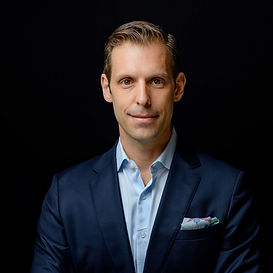
By Sarah Needler, Director of State Impact, Results for America

Budget cycles are the primary process for deciding how state and local funds are allocated. But long after a budget is passed, agencies and departments still make consequential decisions about how that funding reaches communities. One of the most common tools for turning policy goals into public services is competitive grantmaking.
Grant programs can take many forms. Some are tightly specified arrangements that look almost like procurement, where government pays a provider to deliver a defined service at a set rate. Others are more open-ended, inviting communities and organizations to propose their best ideas for solving a public problem. Some choices are fixed by statute, often including the total amount of funding or the broad purpose of the grant. But many others are not.
Government leaders and grant managers often have substantial discretion over how funds are allocated, including who is eligible, what services are prioritized, which populations are reached, what evidence is valued, and how applications are scored. That means grantmaking is not just an administrative function. It is a powerful strategy for shaping public resources around better outcomes.
Traditional grantmaking tends to emphasize compliance, narrative quality, or organizational capacity. But a well-written application does not necessarily mean a program will lead to better outcomes. A familiar program is not always an effective program. And without clear evidence standards, funding decisions can unintentionally reward the status quo.
Public leaders need grant processes that ask a simple but powerful question: What reason do we have to believe this will work for the people we are trying to serve?
At Results for America, we provide technical assistance to state and local governments to help them embed evidence into the rules, templates, and scoring criteria that guide funding decisions. In many grant programs, the most common update to a Request for Proposal (RFP) from one year to the next is simply changing the date. The substance of the opportunity — who is eligible, what applicants are asked to demonstrate, how proposals are scored, and what grantees report back — often remain largely unchanged. That means governments may be missing a practical opportunity to use existing grantmaking processes to prioritize programs and strategies that are more likely to improve outcomes.
To make this work concrete, we use a three-part evidence-based grantmaking framework:
1. Clearly define evidence to create a shared understanding.
2. Prioritize programs that are likely to work by rewarding evidence-based proposals in the scoring rubric.
3. Modify policies and templates so evidence becomes routine practice, not a one-off requirement.
The State of Rhode Island recently approved what we believe is the first statewide evidence-based competitive grantmaking policy in the country. Applying to executive branch solicitations of $500,000 or more, the policy requires agencies to define evidence using the Rhode Island Evidence Scale, ask applicants to document their evidence, and prioritize those interventions in scoring. It also requires reporting on the distribution of funding across evidence tiers.
With this policy, Rhode Island moved from isolated evidence-based grant programs to a systematic, statewide approach. This will help the state be clearer about what they are funding, why they believe it will work, and how they will learn from the results. Even more importantly, we expect this policy will help lead to better outcomes for Rhode Islanders.
This matters even more as governments face tighter fiscal conditions. When public leaders can show that grant dollars are being directed toward strategies with evidence of effectiveness, and that newer strategies are being tested and improved, they strengthen both performance and public trust.
Every state and local government can start somewhere: define evidence in one high-priority grant program, add evidence criteria to a scoring rubric, ask applicants to explain their theory of change, or track funding directed to proven approaches. These steps may sound technical, but they can add up to meaningful change.
As Results for America has highlighted in The Department of What Works, states are already showing what investing in what works looks like in practice: Colorado has expanded access to universal preschool, Tennessee has directed grant funding toward evidence-based reentry and violence intervention programs, and Minnesota has invested in free school meals for every student. Rhode Island has shown what it looks like to move from good intentions to statewide policy. The next step is for more governments to make evidence not the exception in grantmaking, but the default.
To learn more about evidence-based grantmaking and how governments can use funding decisions to improve outcomes, explore these resources:
● Results for America. 2025. State Evidence-Based Grantmaking Guide. A practical framework for embedding evidence into grantmaking policies, templates, scoring criteria, and reporting systems.
● Results for America. The Department of What Works. RFA’s Substack highlights stories of how governments are improving real-world outcomes by investing in what works.
● Merrick, Weston, Pete Bernardy, and Patrick Carter. 2024. “Invisible and Indispensable: Using the Lowly Request for Proposals to Advance Public Value.” Public Administration Review 84(2): 206–212.
The contents of this Guest Column are those of the author, and not necessarily Barrett and Greene, Inc
#StateandLocalEvidenceBasedGrantmaking #StateandLocalGovernmentPerformanceManagement #StateandLocalGovernmentManagement #StateEvidenceBasedGrantMaking #ResultsForAmerica #RhodeIslandEvidenceBasedCompetitiveGrantmakingPolicy #StateEvidenceBasedGrantmakingPolicy #StateEvidenceBasedGrantmakingGuide #StateandLocalCompetitiveGrantmaking #EvidenceBasedGrantmakngFramework #StateandLocalRequestForproposalAndGrantmaking #StateandLocalProcurementAndGrantmaking #StateandLocalEvidenceDefinition #StateandLocalGrantmakingDiscretion #StateandLocalPolicyGoals #SarahNeedler #BandGGuestColumn #BarrettandGreeneInc