GUEST COLUMN.

WHAT’S HAPPENING WITH TRUST IN LOCAL GOVERNMENT?
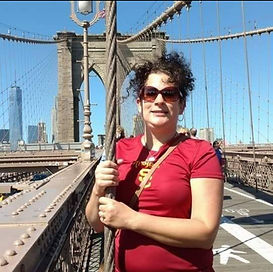
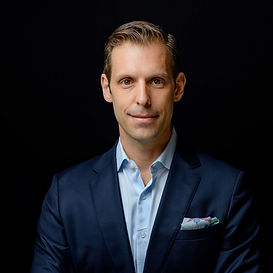
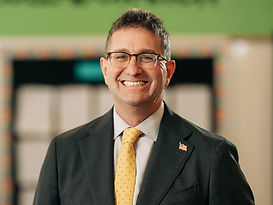
By Dr. David Swindell, Director and Professor, Public Policy Institute, O’Neill School of Public & Environmental Affairs, Indiana University with Alejandra Aponte, Applied Methodologist, Zencity and Michael Rosenbaum, Head of Methodology, Zencity

The issue of trust in local government is a critical concern of public administrators, professional associations, and scholars. But the question is far from being fully understood and there are relatively few evidence-based interventions to address declines in trust. There is no convincing evidence as to whom or which units we are referring to when asking residents about their trust in local government. This piece highlights new work on these questions using new data from Indianapolis, Indiana.
In November 2022, the Local Government 2030 initiative brought together 50 up and coming local government management individuals to address elements of the Grand Challenges in public administration issued by the National Academy of Public Administration (NAPA). Participants identified three issues they felt would be challenges facing them when they were in leadership positions by 2030.
After the initiative wrapped up in January 2024, Wally Bobkiewicz (city manager of Issaquah, WA) organized a new effort to bring more social scientists from around the country into the work of local government, with assistance from me and support from NAPA. We started building a national agenda for local government research grounded in the needs of local communities. We worked with practitioners, local government professional associations, and local government scholars for 18 months, convening an array of dialogs, and presenting the final agenda at the 2025 NAPA conference.
The interesting primary takeaway from this effort was that all three broad groups of participants agreed that the #1 most significant problem needing to be addressed by local governments is the decline in trust that has reached the local level. This reinforces other efforts that have found similar concerns over the decline in trust.
The Pew Research Center’s poll has tracked the decline of trust in the national government from its high of 77% in 1964 to its historic low in September 2025 with 17% saying they “trust the government in Washington to do what is right just about always/most of the time.”
Typically, state and local governments have maintained a high level of trust…until now. Today, declines have reached state governments around the country in conjunction with the rise in higher levels of partisanship. And now, the decline is beginning to manifest in terms of resident trust in their local government.
Many scholars and pundits have examined the factors associated with these declines. But what has not received as much attention is: 1) who within local government we mean when talking about trust, and 2) what can we do to slow the decline and bend the curve in a more positive direction.
In early 2026, Zencity approached the Indiana University (IU) Public Policy Institute to develop a new survey instrument to capture community trust in their local government. Zencity is a Govtech company providing AI-supported products to help local governments address community feedback and needs. This has provided an opportunity to bring private resources and IU’s academic expertise to bear on this critical issue.
The approach we are taking is different than prior efforts. First, as a tool for measuring trust, the survey goes beyond global trust to focus on who the respondents mean when they say they trust or distrust their local government. Are they trusting the police? Elected leaders? Or city workers?
Second, the survey goes beyond measuring trust itself by identifying the factors affecting trust. These are factors that may be amenable to policy or process interventions by local government leaders. In March and April, Zencity field tested the instrument on a representative sample yielding 606 residents of Indianapolis. The remainder of this piece highlights the differential levels of trust while a future piece will focus more attention on the factors affecting trust.
Indianapolis has long been a city that scored neighbors and their governments highly on trust and satisfaction with city services. The field test of this new instrument suggests that overall trust has fallen. Overall, trust among residents is down, with less than half (49%) reporting that they trust their neighbors.
Government units fare far worse. Trust in local government is approximately 30%. But the variations in who residents trust are telling. Residents report greater levels of trust in the city’s police (39%), public schools (39%), and city workers (37%).
Residents appear to be less trusting of elected officials. Less than one-third trust the elected judges of the Marion County courts (31%) and only approximately 27% trust the mayor and city-county council. This general pattern of greater trust among city workers over elected officials is similar when asking respondents about the factors driving trust: integrity, responsiveness to public input, treating everyone with fairness, ability to plan for the future, and acting in the best interests of the city.

The primary and disappointing finding is that trust has already fallen to this level. But the differences in terms of which elements of local government are trusted are interesting. Surveys of elected officials suggest that they do not see this decline either happening or a threat to community and governance health.
As we continue to dive into the Indianapolis data and prepare for another field test of the new survey instrument, we will begin to bring additional empirical findings to bear on ways local officials can be proactive in shoring up the communities’ civic health. The results above suggest one initial focus may be to work with local government elected officials’ associations (e.g., states’ leagues of cities) to help inform their members on the evidence of a decline in local government trust and highlight the dangers of such a decline to the quality of life, health, and safety of their residents. Trying to proceed on policy interventions to strengthen trust will only be made more difficult without their participation and support.
The contents of this Guest Column are those of the authors, and not necessarily Barrett and Greene, Inc
#TrustInLocalGovernment #StateandLocalGovernmentManagement #StateandLocalManagement #StateandLocalTrustInGovernment #TrustInCityGovernment #TrustInStateGovernment #TrustInCountyGovernment #StateandLocalPerformance #StateandLocalPerformanceManagement #FallingPublicTrustInGovernment #LocalGovernment2030Initiative #NationalAcademyPublicAdministration #NAPA #TrustAndCityManagement #StateandLocalPublicAdministration #PublicAdministrationAndPublicTrust #DecliningTrustInElectedOfficials #ResidentOutreachAndStudyOfTrust #FactorsDrivingTrust #IndianaUniversityPublicPolicyInstitute #CapturingLevelsOfCommunityTrust #SurveyingLevelsOfCommunityTrust #CommunityFeedbackAndGovernmentTrust #IndianapolisTrustSurveyFieldTest #MeasuringDecliningLocalTrustInGovernment #DecliningTrustInNeighbors #PewCharitableTrustsAndGovernmentTrust #DavidSwindell #Zencity #CityManagerWally Bobkiewicz #BandGGuestColumn