VOICES FROM ASPA, 2026.
IAN ELLIOTT: "HOW SCOTLAND LEARNED FROM VIRGINIA"
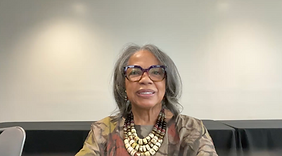
Ian C. Elliott, senior lecturer in public administration at the University of Glasgow Center for Public Policy, was one of eight luminaries we filmed at the American Society for Public Administration’s annual conference in Hollywood, California between March 20 and March 24th. This is the second in a series that will appear on Thursdays in this space.
In this video, Elliott, one of many international attendees and speakers at the conference, discusses the evolution of Scotland’s National Performance framework, which developed in the years following a referendum that led to Scotland enacting its own parliament in 1999.
While devolution provided Scotland with greater power over policy areas that had previously been administered through the UK parliament, the transition also created a number of challenges.
The National Performance Framework was created to address those challenges as part of a major government restructuring in 2007. As Elliott explains, the framework was based on a model from Virginia that was called Virginia Performs.
“When the National Performance Framework was implemented there was a genuine sense that this was a really good idea; that this was something that was valuable and important to try to shift the debate away from constant knee jerk reactions and fire fighting to thinking about how can officials work with ministers in a way that’s much more long term, much more joined up across the different parts of government and then much more strategic . . .”
As a practitioner in government at the time, Elliott was aware of a “certain kind of cynicism about public service reform”. Subsequently, as an academic researcher, he has looked at the development of the performance framework; the investment in training and development of staff and how the original five strategic priorities have evolved.
“What I find is that having a really clear vision for government and having these clear strategic priorities has really helped to facilitate some of those useful discussions between administrative staff and the politicians, and it’s also improved trust in government, as well.”