RON ON THE ROAD.
HEIMAEY ISLAND, ICELAND: WHEN A VOLCANO ERUPTS
Iceland is one of those places that almost doesn’t look real. Over the course of my trip, I saw waterfalls that seemed to appear around every corner, rainbows stretching across landscapes that already looked like paintings, whales breaking the surface of the North Atlantic, volcanic terrain, caves, glaciers, small communities, and even the place where two tectonic plates are slowly pulling apart. There were moments when I found myself wondering how one relatively small country could possibly contain so much.
But when people ask me what impressed me most about Iceland, my answer is not one of those things. It was a community, and more specifically, it was what happened on the island of Heimaey in the Westman Islands in 1973 and what the people who lived there did when nature quite literally began destroying their town.
On January 23, 1973, at about 1:50 in the morning, a volcanic eruption suddenly began just outside the community. There had been little warning. More than 5,000 people lived on Heimaey at the time, and virtually the entire population had to leave their homes in the middle of the night, many by fishing boat, not knowing what they would return to or whether their homes would still be standing.

The eruption continued for more than five months. Ash fell so heavily that in some areas it accumulated several meters deep, creating enormous pressure on rooftops. Lava moved steadily toward neighborhoods and toward the harbor, burying homes and changing the geography of the island itself. By the time the eruption ended, hundreds of homes and buildings had been destroyed or damaged, and a new volcanic cone, Eldfell, had risen from the landscape.
What makes this story so remarkable is not simply what the volcano destroyed. It is what the people of Heimaey did in response.
The harbor was the lifeblood of the island and central to the fishing economy that sustained the community. As the lava advanced toward it, firefighters, engineers, residents and others began pumping seawater directly onto the lava in an effort to cool it, slow it and protect the harbor entrance. The historical photographs are remarkable because they show hoses spraying seawater onto molten lava while homes and buildings sit only a short distance away.
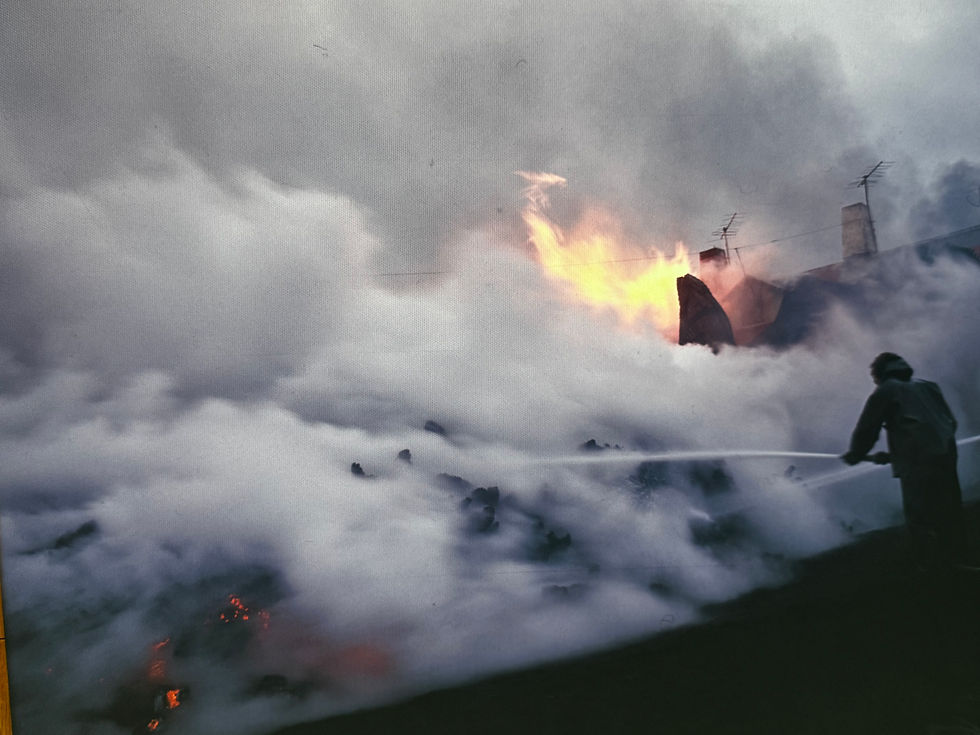
Standing there and reading the story, I kept thinking about the audacity of the effort. They were not under any illusion that they could defeat nature, but they understood exactly what was at stake and refused to simply stand by while the future of their community disappeared in front of them.
There is a lesson in that for every community. Leadership during a crisis rarely comes with perfect information, unlimited resources or any guarantee that the plan will work. Often, leaders only know what is at risk, what tools they have available and that doing nothing is not an acceptable option. The people of Heimaey improvised, adapted and worked together to protect what they could, while accepting that some things simply could not be saved.
When the eruption finally ended, they faced another enormous question: whether the community still had a future. Many residents returned. They cleared ash, dug out streets and buildings, rebuilt homes, restored infrastructure and reclaimed the place they loved. Today, Heimaey is once again a thriving community, but the landscape still carries the scars and evidence of what happened there more than fifty years ago.
I spend a lot of my life visiting communities and talking with the people who lead them, and one thing I have learned is that the places we love are much more than streets, buildings and infrastructure. They are relationships, memories, institutions, traditions, businesses, churches, schools and families. Most of all, they reflect the collective belief of the people who live there that this place matters and that its future is worth fighting for.
That may be what moved me so much about the Westman Islands. Iceland gave me waterfalls, rainbows, whales and landscapes unlike anything I had ever experienced, and I loved all of it. But the story I carried home was the story of a small island community faced with circumstances that could easily have meant its end and the people who instead decided to fight for its future.
More than fifty years later, you can walk through Heimaey and see where the lava stopped, where homes once stood and where an entirely new mountain rose from the ground. At the same time, you see houses, businesses, boats in the harbor and people continuing to build their lives there. Nature changed their island forever, but it did not get the final word on their community. Of everything I experienced in Iceland, that may have been the most amazing thing of all.
Learn more at Eldheimar Museum. The Eldheimar Museum on Heimaey tells the story of the 1973 eruption, the evacuation and the remarkable recovery of the Westman Islands community.
About Ron on the Road
Ron Holifield speaks to over 2,000 local government officials annually and has coffee with more than 250 local government officials each year as part of his travels. If you have a cool place you think he should visit, email Ron@CivicMarketplace.com.
NOTE: This column was written with the assistance of Melissa Valentine, senior director of operations and support at Civic Marketplace.
#RonOnTheRoad #RonHolifield #HeimaeyIslandIceland #CommunityLeadership #EidheimarMuseumIceland #HeimaeyIslandIceland #1973HeimaeyIslandVolcanoEruption #DisasterResponse #DisasterRecovery #WestmanIslandsIceland #LessonsOfCommunityRecovery #PlaceMatters #LocalGovernmentCommunityandValues #DisasterRecoveryLessons #EmergencyResponseAndAdvancingLava #RebuildingAThrivingIcelandCommunity #NaturalDisasterAndCommunityLeadership #EldFellVolcanicCone #BarrettandGreeneInc