
MANAGEMENT UPDATE.
MEETING THE NEEDS OF AN AGING POPULATION
The public policy issues raised by an aging population have garnered attention since baby boomers were still mostly in their twenties. In February 1977, Newsweek magazine ran a cover story about the “Graying of America” and through the 1980s, alarms continued to be raised about upcoming policy concerns, including potential Social Security insolvency and projections of a worrisome drop in the ratio of active workers to retirees.
The number of older U.S. residents continues to rise. While individual state demographics differ, the percentage of individuals 65 and older grew from 12.4% in 2003 to 18% in 2024. It is projected to be at 20% in 2030 with the percentage continuing to rise, particularly given a low birth rate, and currently reduced but uncertain future immigration.
The Pew Charitable Trusts recently took a fresh look at the aging U.S. population and the kinds of actions that states are taking to deal with accompanying public policy challenges. “By taking steps to assess and strategize now, states can make informed budget decisions for the future,” advises the report, which was posted by Pew’s “Managing Fiscal Risks” project on July 7.
The steps that states are taking include the development of strategic plans, greater cross agency coordination, budget and long-term fiscal analysis and needs assessments.
According to Pew’s analysis of needs, the areas that states have most frequently targeted as requiring attention are “transportation, caregiver support, housing and healthcare.”
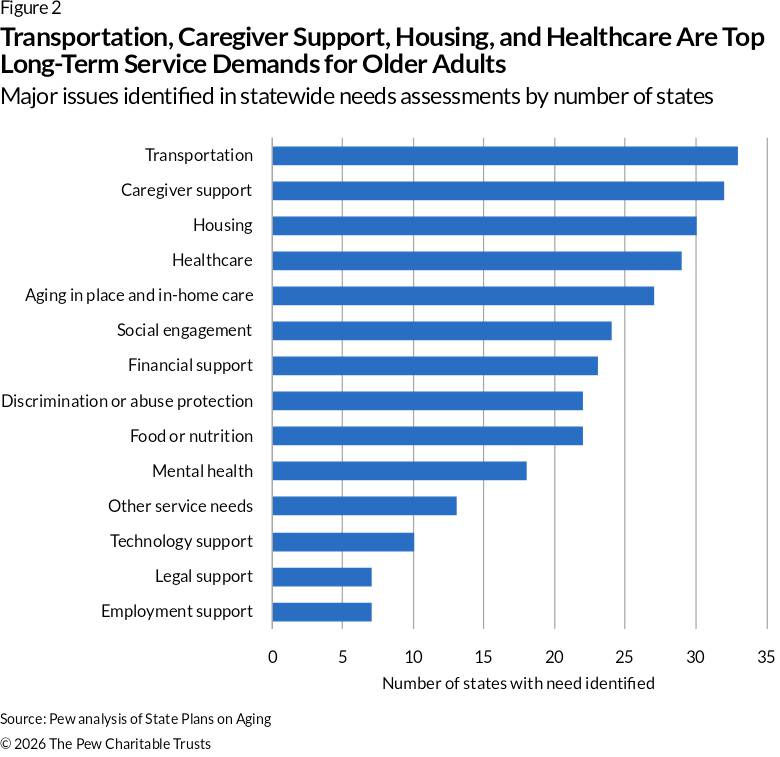
The needs forecast by states align with the three areas the study targets as presenting budget risk due to their aging populations:
Revenue changes. Reductions in revenue stem from the large number of states that depend on income and sales taxes. Many states also offer tax exemptions to older individuals.
Health spending. These costs rise based on the complex health problems that are experienced by older individuals, as well as the need for long-term care and the fact that many retiree healthcare costs are unfunded. In terms of Medicaid, the report points out that older adults made up just 10% of enrollment in 2023 but were responsible for 21% of expenditures.
Demand for state services: These include transportation, housing and rental or utility assistance, with older individuals “more likely than working-age people to live in low-income households.” Caregiving costs are also significant. With a high percentage of caregiving provided without pay, “states may face rising demand for caregiving support programs and other financial assistance,” according to the report.
How are states planning for the effect of this long projected and continuing demographic change? One way is through detailed fiscal analyses – a path followed by Colorado, Montana, Pennsylvania, Vermont and Virginia. For example, Pennsylvania has estimated its rising Medicaid costs while Colorado has forecast its “constrained revenue growth.”
Another approach taken by 14 states is to develop 10-year strategic plans that address the needs of their aging population.

#StateandLocalGovernmentManagement #StateandLocalPerformanceManagement #StateandLocalPerformance #StatesAndDemographicChange #StateStrategicPlanningandAgingPopulation #StateServicesAndAgingPopulation #StateHealthCostsAndAgingPopulation #StateRevenueChallengeAndAgingPopulation #PewCharitableTrusts #PewAnalysisAgingPopulationAndStateGovernment #TaxChallengesAndAgingPopulation #StateAgencyCoordination #ManagingFiscalRisks #StateandLocalManagementNews #StateandLocalDemographicNews #BarrettandGreeneInc


